


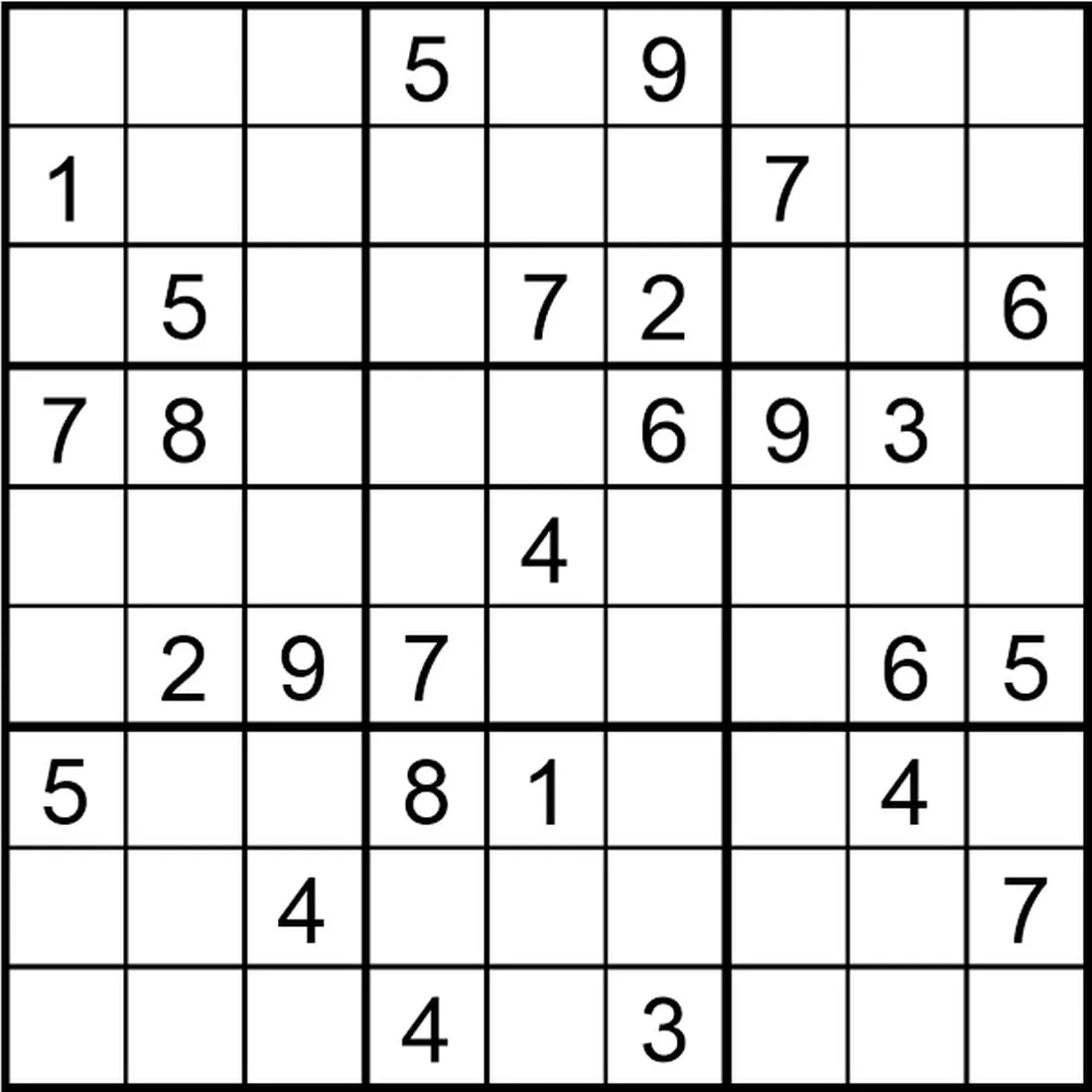
## How to Make a Sudoku Grid: A Step-by-Step Guide
### Introduction to Sudoku Grid Creation
Sudoku is a popular logic-based puzzle that involves filling a 9×9 grid with digits so that each column, each row, and each of the nine 3×3 subgrids that compose the grid (also called “boxes”, “blocks”, or “regions”) contain all of the digits from 1 to 9. Creating your own Sudoku grid can be a fun and challenging endeavor. Here’s a step-by-step guide to help you make your own Sudoku grid.
### Step 1: Start with a Grid
Begin by drawing a 9×9 grid. You can use graph paper or create a grid using a word processor or drawing tool.
### Step 2: Fill in the Clues
Sudoku puzzles are made up of clues, which are the numbers already filled in the grid. Decide how many clues you want to include. A typical Sudoku puzzle has about 17 to 30 clues. Ensure that no number is repeated in any row, column, or 3×3 box.
### Step 3: Place Clues Strategically
When placing clues, consider the following to create a challenging puzzle:
– Avoid placing clues in patterns that are too obvious.
– Ensure that there is at least one clue in each row, column, and box.
– Distribute the clues evenly across the grid.
### Step 4: Check for Validity
After placing the clues, double-check your grid to make sure that no number is repeated in any row, column, or 3×3 box. This is crucial for a valid Sudoku puzzle.
### Step 5: Add Difficulty
To increase the difficulty of your puzzle, you can add more clues or remove some existing ones. Remember, the more clues you add, the easier the puzzle will be for solvers.
### Step 6: Test Your Puzzle
Before sharing your Sudoku, test it to ensure that it has a unique solution. You can do this by solving it yourself or using an online Sudoku solver.
### Frequently Asked Questions (FAQ)
**Q: How do I know how many clues to place in my Sudoku grid?**
A: The number of clues can vary, but a good starting point is to have 17 to 30 clues. This range usually results in a challenging yet solvable puzzle.
**Q: Can I use any number from 1 to 9 in my clues?**
A: Yes, you can use any number from 1 to 9 as long as each number appears only once in each row, column, and 3×3 box.
**Q: How can I ensure my Sudoku has a unique solution?**
A: After creating your grid, solve it to ensure that there is only one way to fill in the remaining empty cells. If you find multiple solutions or no solution, you may need to adjust the clues.
**Q: Can I make a Sudoku grid with more or fewer than 9 rows and columns?**
A: Traditional Sudoku puzzles are 9×9 grids. While you can create variations with different sizes, the 9×9 format is the most common and recognized.
**Q: How can I make my Sudoku puzzle more difficult?**
A: To increase difficulty, add more clues, remove some existing ones, or create a more complex pattern for the clues.
**Q: What should I do if I find a mistake in my Sudoku grid?**
A: If you find a mistake, correct it by adjusting the clues or re-arranging them. Always ensure that no number is repeated in any row, column, or 3×3 box.