


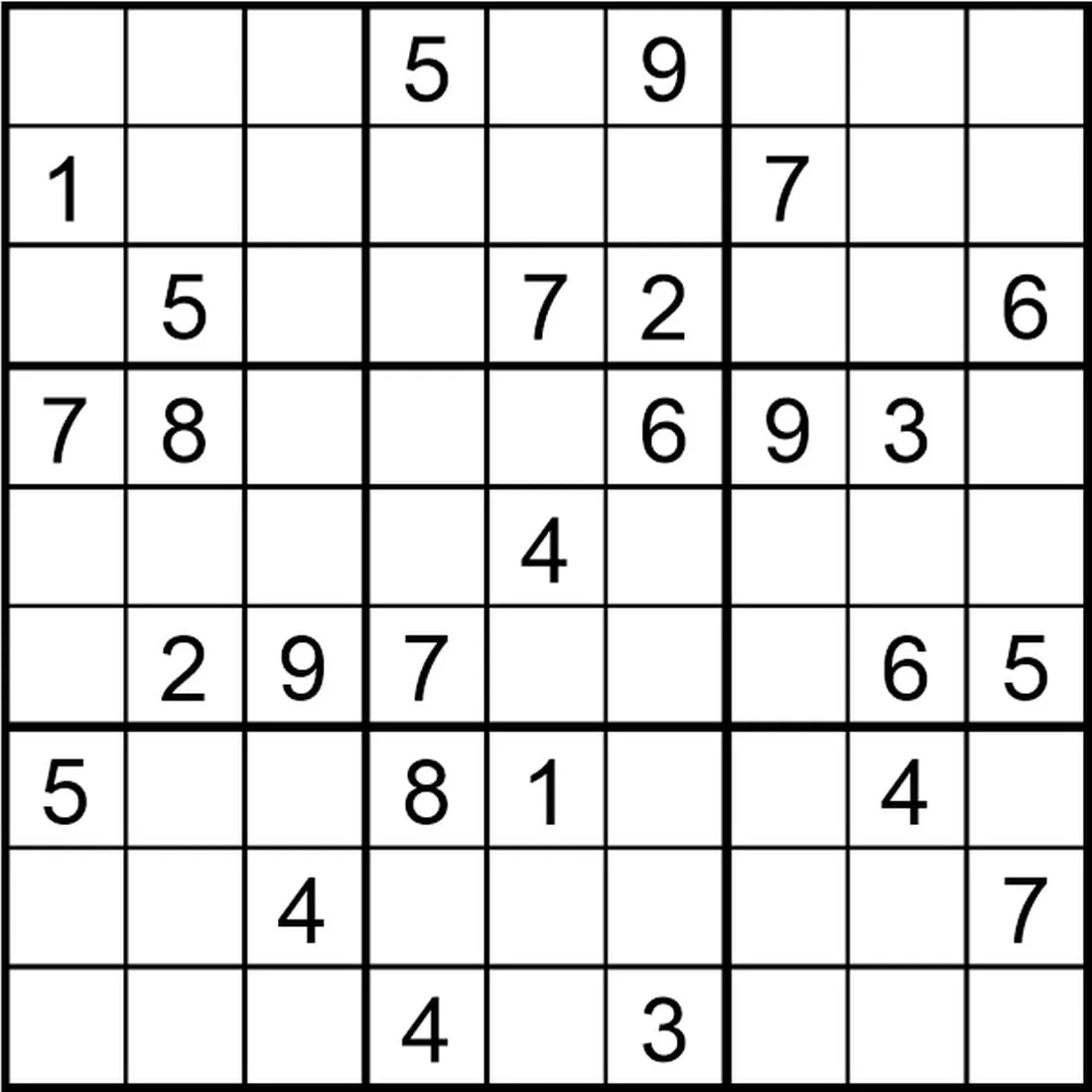
### Easy Kids Sudoku Puzzles: A Fun Way to Enhance Cognitive Skills
**Introduction**
Sudoku puzzles have become increasingly popular, not just for adults but also for kids. These puzzles offer a great way to enhance cognitive skills while having fun. In this article, we will explore easy kids Sudoku puzzles and how they can be beneficial for young minds.
**Section 1: What Are Kids Sudoku Puzzles?**
Kids Sudoku puzzles are simplified versions of the classic Sudoku game designed specifically for younger players. They usually have smaller grids and fewer numbers to fill in, making them easier to solve and more accessible for children. These puzzles can be found in various formats, including printed books, online, and mobile applications.
**Section 2: Benefits of Kids Sudoku Puzzles**
1. **Cognitive Development**: Sudoku puzzles help children develop critical thinking, problem-solving, and logical reasoning skills. By solving puzzles, kids learn to pay attention to detail and think strategically.
2. **Memory Enhancement**: As kids solve Sudoku puzzles, they are constantly practicing their memory skills. Remembering the numbers already placed on the grid and applying them to new cells is an excellent exercise for memory retention.
3. **Patience and Concentration**: Engaging with Sudoku puzzles requires patience and concentration. Children who regularly solve these puzzles may find it easier to focus on tasks and maintain their attention span.
4. **Math Skills**: Sudoku puzzles often involve basic arithmetic concepts. As kids solve puzzles, they may subconsciously improve their arithmetic skills, which can be beneficial for their math education.
**Section 3: How to Solve Kids Sudoku Puzzles**
1. **Start with Easy Puzzles**: Begin with puzzles that have fewer numbers to fill in, such as a 4×4 grid. As your child becomes more comfortable, progress to larger grids with more numbers.
2. **Follow the Rules**: Make sure your child understands the rules of Sudoku. Each row, column, and 3×3 sub-grid must contain all numbers from 1 to the size of the grid (4 in a 4×4 grid).
3. **Use Logic and Deduction**: Encourage your child to use logical reasoning to deduce the correct numbers for empty cells. They should not guess without a valid reason.
4. **Take Breaks**: If solving a puzzle becomes frustrating, it’s okay to take a break. This can help maintain a positive learning experience.
**FAQ**
**Q: Are Sudoku puzzles suitable for all age groups?**
A: Yes, Sudoku puzzles can be suitable for all age groups, but the difficulty level should be adjusted according to the solver’s age and experience.
**Q: How often should kids solve Sudoku puzzles?**
A: There is no specific frequency for solving Sudoku puzzles, but regular practice can help improve cognitive skills. It’s best to engage with puzzles in moderation to maintain interest and enjoyment.
**Q: Can solving Sudoku puzzles improve academic performance?**
A: While there is no direct correlation, solving Sudoku puzzles can enhance various cognitive skills that are beneficial for academic performance, such as memory, concentration, and logical reasoning.
**Q: Are there any online resources for kids Sudoku puzzles?**
A: Yes, there are numerous websites and mobile applications that offer free kids Sudoku puzzles. Some popular options include “Sudoku for Kids” and “KidSudoku.com.”
**Q: Should children solve Sudoku puzzles alone or with guidance?**
A: Both options have their benefits. Children can learn independently by solving puzzles on their own, while working with a parent or teacher can provide guidance and reinforce learning.