


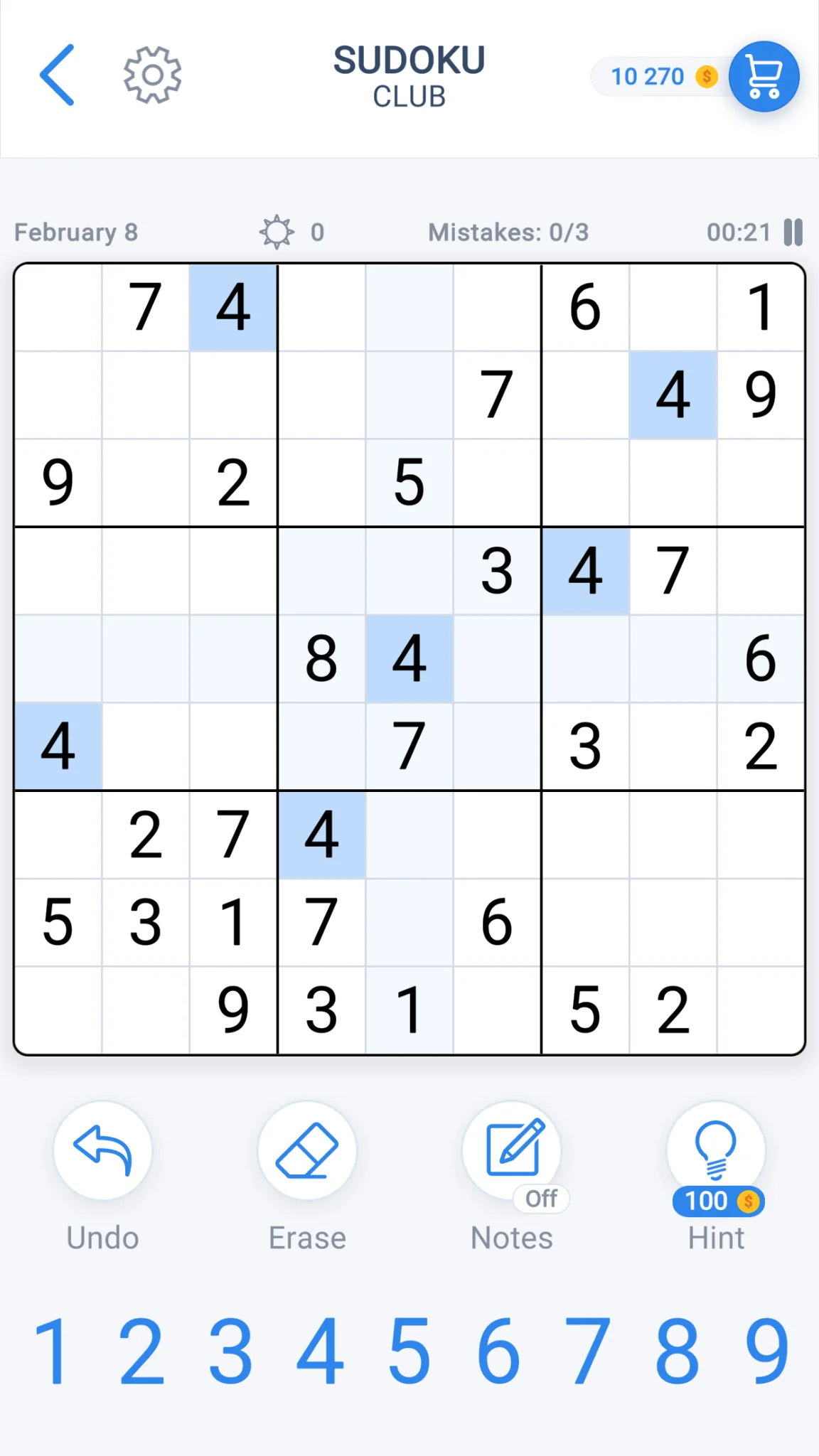
## Sudoku C Code Project
### Introduction
The Sudoku C Code Project is a comprehensive guide designed to help developers and enthusiasts learn how to implement a Sudoku solver in C programming language. Sudoku is a popular logic-based combinatorial number-placement puzzle. This project aims to provide a step-by-step approach to creating a functional Sudoku solver using C, covering everything from basic data structures to advanced backtracking algorithms.
### Getting Started
#### Prerequisites
– Familiarity with C programming language.
– Understanding of basic algorithms and data structures.
– A text editor or an integrated development environment (IDE).
#### Setup
1. **Install C Compiler**: Ensure you have a C compiler installed, such as GCC.
2. **Create a New Project**: Open your text editor or IDE and create a new file named `sudoku.c`.
3. **Write Your Code**: Begin by including necessary headers, defining constants, and setting up your Sudoku board.
#### Example Code Snippet
“`c
#include
#include
#define BOARD_SIZE 9
bool isValid(int board[BOARD_SIZE][BOARD_SIZE], int row, int col, int num);
bool solveSudoku(int board[BOARD_SIZE][BOARD_SIZE]);
void printBoard(int board[BOARD_SIZE][BOARD_SIZE]);
int main() {
int board[BOARD_SIZE][BOARD_SIZE] = {
{5, 3, 0, 0, 7, 0, 0, 0, 0},
{6, 0, 0, 1, 9, 5, 0, 0, 0},
// … Initialize the rest of the board
};
if (solveSudoku(board)) {
printBoard(board);
} else {
printf(“No solution exists.\n”);
}
return 0;
}
bool isValid(int board[BOARD_SIZE][BOARD_SIZE], int row, int col, int num) {
// Check if the number is not repeated in the current row, column, and 3×3 subgrid
// … Implementation
}
bool solveSudoku(int board[BOARD_SIZE][BOARD_SIZE]) {
// Solve the Sudoku using backtracking
// … Implementation
}
void printBoard(int board[BOARD_SIZE][BOARD_SIZE]) {
// Print the Sudoku board
// … Implementation
}
“`
### FAQs
**Q: What is the purpose of the isValid function?**
A: The `isValid` function is used to check whether placing a number in a specific cell of the Sudoku board is valid. It ensures that the number is not repeated in the same row, column, or 3×3 subgrid.
**Q: How does the backtracking algorithm work?**
A: The backtracking algorithm is a recursive method used to solve the Sudoku puzzle. It tries to fill the board with numbers and, if it encounters a contradiction, it backtracks to the previous step, changing the number and trying again.
**Q: Can I customize the Sudoku board size?**
A: Yes, you can customize the Sudoku board size by modifying the `BOARD_SIZE` constant. However, note that the implementation may require adjustments to accommodate different board sizes.
**Q: What are the common challenges in implementing a Sudoku solver?**
A: Common challenges include efficiently checking for valid numbers, managing recursion and backtracking, and optimizing the solution for larger boards.
**Q: How can I test my Sudoku solver?**
A: You can test your Sudoku solver by providing different boards with known solutions and verifying that your program outputs the correct answers. Additionally, you can use online Sudoku generators to create puzzles of varying difficulty.
**Q: Are there any optimizations that can be made to improve performance?**
A: Yes, optimizations include using more efficient data structures, reducing unnecessary computations, and implementing constraint propagation techniques.
By following this guide and addressing these frequently asked questions, you should be well on your way to creating a robust Sudoku solver in C. Happy coding!