


### How to Play Wing Sudoku: A Comprehensive Guide
#### Understanding Wing Sudoku
Wing Sudoku is a variant of the classic Sudoku puzzle that introduces additional complexity and strategy. It combines the standard Sudoku rules with a unique “wing” pattern that adds a layer of challenge to the game. Here’s a step-by-step guide to get you started.
#### 1. Basic Rules of Sudoku
Before diving into Wing Sudoku, it’s essential to understand the basic rules of Sudoku:
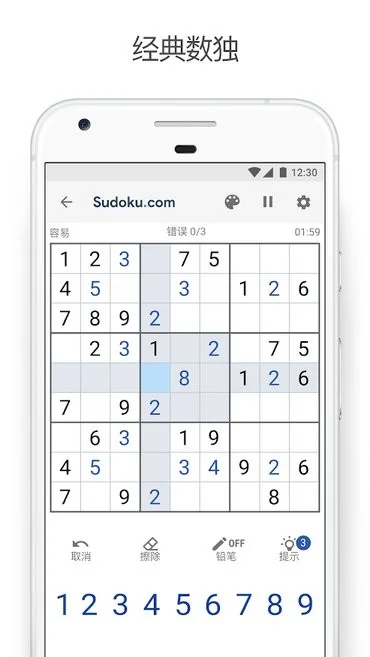
– A standard Sudoku grid is a 9×9 grid divided into nine 3×3 subgrids called “boxes” or “regions.”
– Each row, column, and 3×3 box must contain all of the digits from 1 to 9 without repetition.
– The goal is to fill the entire grid so that each row, column, and 3×3 box contains the numbers 1 to 9.
#### 2. Introduction to Wing Sudoku
Wing Sudoku adds a “wing” pattern to the standard Sudoku grid. This pattern consists of three additional numbers that are not part of the standard Sudoku rules. The wing pattern is typically a 3×3 or 4×4 grid that is connected to the main 9×9 Sudoku grid.
#### 3. How to Play Wing Sudoku
Here’s how to play Wing Sudoku:
1. **Set Up the Grid**: Start with a standard Sudoku grid. Then, identify the wing pattern. It could be a 3×3 or 4×4 grid, and it will be marked or distinguished in some way from the main grid.
2. **Understand the Wing Rules**: In Wing Sudoku, the wing pattern has its own rules. Typically, the wing pattern must contain all the digits from 1 to 9, just like the main grid. Additionally, the wing pattern may have additional rules, such as the wing numbers must appear in the same row, column, or box in the main grid.
3. **Fill in the Givens**: Begin by filling in any given numbers in both the main grid and the wing pattern.
4. **Apply Sudoku Strategies**: Use standard Sudoku strategies to fill in the grid. This includes:
– **Single Candidate**: If only one number can fit in a particular cell, place that number.
– **Pencil Marking**: Keep track of possible numbers in each cell using pencil marks.
– **Elimination**: Eliminate numbers from cells based on the numbers already placed in the row, column, and box.
5. **Utilize the Wing Pattern**: When solving, pay special attention to the wing pattern. Use the wing rules to guide your placement of numbers in the main grid.
6. **Check for Errors**: Regularly check your work for errors. Ensure that each row, column, and 3×3 box in both the main grid and the wing pattern contains the numbers 1 to 9 without repetition.
#### Frequently Asked Questions (FAQ)
**Q: What is the difference between standard Sudoku and Wing Sudoku?**
A: Wing Sudoku adds a unique wing pattern to the standard Sudoku grid, introducing additional rules and complexity.
**Q: Can I use standard Sudoku strategies in Wing Sudoku?**
A: Yes, you can use all standard Sudoku strategies in Wing Sudoku, but you’ll also need to consider the wing pattern and its specific rules.
**Q: Is there a specific wing pattern for every Wing Sudoku puzzle?**
A: No, the wing pattern can vary from puzzle to puzzle. It could be a 3×3 or 4×4 grid, and its placement and rules may differ.
**Q: Can I solve Wing Sudoku without knowing the wing rules?**
A: It’s possible, but understanding the wing rules will help you solve the puzzle more efficiently and effectively.
**Q: Are there different levels of difficulty in Wing Sudoku?**
A: Yes, like standard Sudoku, Wing Sudoku puzzles come in various difficulty levels, from easy to expert.
**Q: Can I create my own Wing Sudoku puzzles?**
A: Yes, you can create your own Wing Sudoku puzzles by designing a wing pattern and setting up the grid accordingly.
By following these guidelines and FAQs, you’ll be well on your way to mastering Wing Sudoku and enjoying the challenge it brings to the classic Sudoku game. Happy solving!