


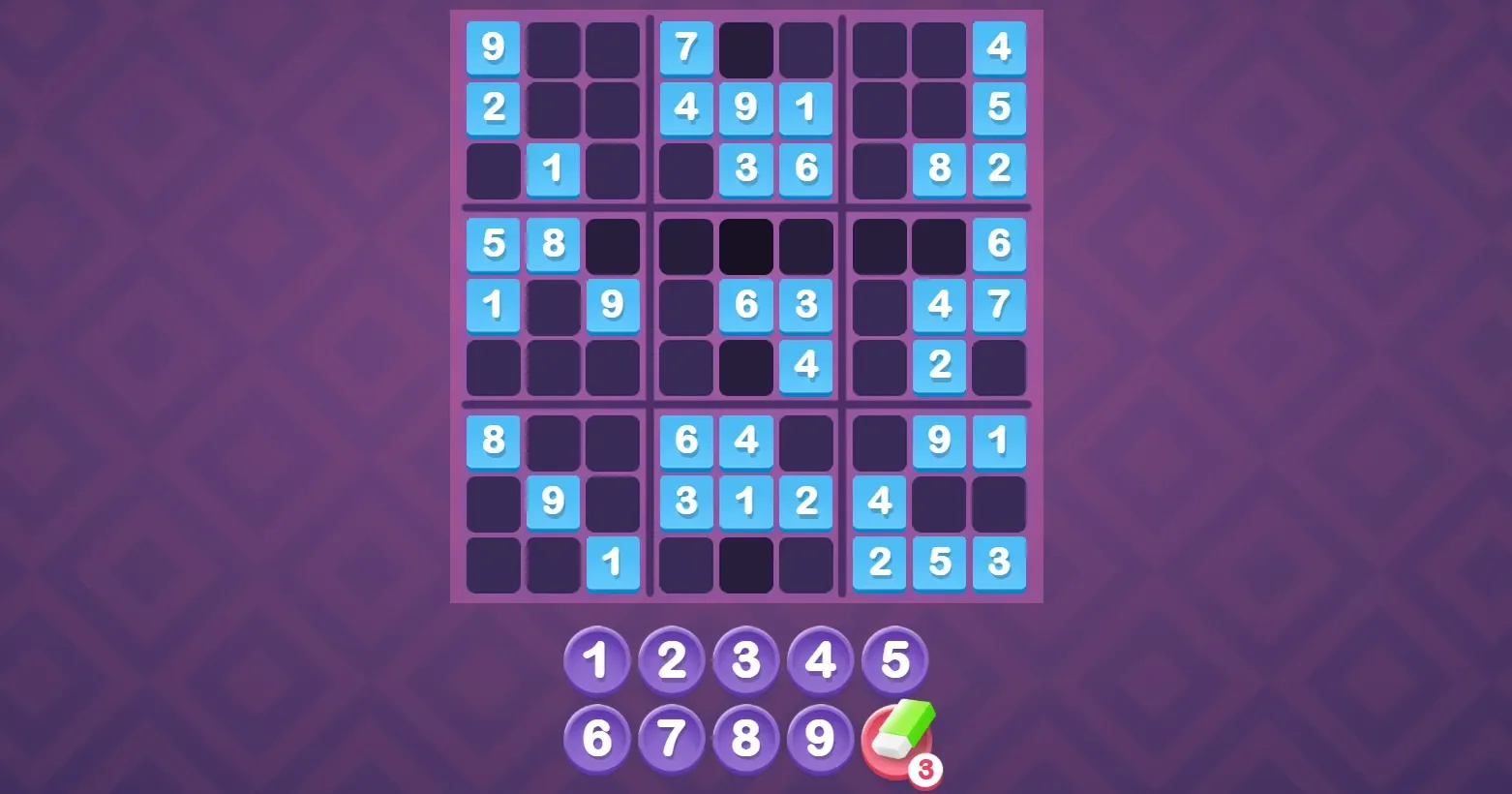
### How to Solve Sudoku D: A Step-by-Step Guide
#### Understanding Sudoku D
Sudoku D, also known as “Diagonal Sudoku,” is a variation of the classic Sudoku game. The main difference lies in the fact that the diagonals of the grid must also contain the digits 1-9 without repetition. This adds an extra layer of challenge to the traditional Sudoku solving process.
#### Step 1: Fill in the Given Numbers
Start by filling in the numbers that are already provided in the Sudoku grid. These numbers will serve as a foundation for your solving process.
#### Step 2: Focus on the Diagonals
Since Sudoku D requires that the diagonals also contain unique digits, pay special attention to these areas. Look for any diagonal that has numbers missing and try to deduce what those numbers should be based on the rest of the grid.
#### Step 3: Use Pencil Marks
As you progress, use pencil marks to indicate potential numbers in the empty cells. This will help you keep track of possibilities without overwriting potential solutions.
#### Step 4: Apply Sudoku Techniques
Utilize the standard Sudoku solving techniques such as:
– **Single Candidate:** Identify cells with only one possible number.
– **Single Elimination:** Eliminate numbers from a row, column, or box based on the numbers already present.
– **Unique Rectangle:** Identify a rectangle with two cells in two rows and two cells in two columns that can only contain two numbers.
– **X-Wing:** Identify rows or columns where two numbers can only occur in two cells, and those two cells are the only ones in their respective rows or columns.
#### Step 5: Check for Diagonal Patterns
Regularly check the diagonals for any patterns that might emerge. For example, if you have a diagonal that is missing the number 4, see if there is a row or column where 4 is still a possibility. This can help you eliminate numbers in the remaining cells of that diagonal.
#### Step 6: Look for Grouping Patterns
Identify any groups of cells where numbers can only be placed in specific cells. This can help you make deductions and narrow down the possibilities.
#### Step 7: Eliminate Possibilities
Continuously eliminate possibilities based on the numbers you have already placed and the constraints imposed by the Sudoku D rules.
#### Frequently Asked Questions (FAQ)
**Q1: What is the difference between Sudoku D and regular Sudoku?**
A1: Sudoku D requires that the diagonals also contain the digits 1-9 without repetition, adding an additional layer of challenge.
**Q2: Can I use the same techniques for solving regular Sudoku to solve Sudoku D?**
A2: Yes, most standard Sudoku techniques can be applied to Sudoku D. However, you must also consider the diagonal constraints.
**Q3: Is it possible to solve a Sudoku D puzzle without using pencil marks?**
A3: While it is possible, using pencil marks can help you keep track of potential numbers and make the process more manageable.
**Q4: How do I identify a unique rectangle in Sudoku D?**
A4: A unique rectangle is a group of four cells, two in each row and two in each column, where only two numbers can be placed. Check for these patterns in the grid.
**Q5: Can I solve Sudoku D puzzles on a computer or mobile app?**
A5: Yes, there are numerous computer programs and mobile apps designed specifically for solving Sudoku puzzles, including Sudoku D variations.
By following these steps and understanding the unique rules of Sudoku D, you’ll be well on your way to mastering this challenging puzzle game. Happy solving!