


### Sudoku Instructions: A Step-by-Step Guide
#### Getting Started with Sudoku
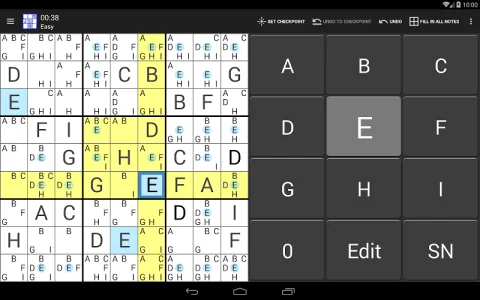
Sudoku is a popular puzzle game that requires players to fill a 9×9 grid with numbers. The objective is to fill the grid so that each row, column, and 3×3 subgrid contain all of the digits from 1 to 9. Here’s a basic guide to help you get started.
##### Step 1: Understand the Grid
The Sudoku grid is divided into nine 3×3 subgrids, also known as regions or boxes. These subgrids are further divided into rows and columns, totaling 81 cells. Each cell can contain a number from 1 to 9.
##### Step 2: Fill the Grid with Given Numbers
The Sudoku puzzle starts with some numbers already filled in. These numbers are clues that help you find the correct numbers for the empty cells. Start by filling in the cells with given numbers.
##### Step 3: Solve for Missing Numbers
For each empty cell, analyze the row, column, and subgrid it belongs to. Eliminate the numbers that are already present in that row, column, and subgrid. The remaining possible numbers are the only ones you can place in that cell.
##### Step 4: Use Logic to Solve
Sudoku is a logic-based puzzle. You must use logical deduction to solve for missing numbers. Look for patterns and sequences that can help you deduce the correct number for each cell.
#### Frequently Asked Questions (FAQ)
**Q1: Can I use a calculator or a computer to solve Sudoku?**
A1: While it’s possible to use a calculator or a computer, the goal of Sudoku is to exercise your brain and improve your logical thinking skills. It’s recommended to solve Sudoku puzzles manually to fully benefit from the experience.
**Q2: What is the difference between Sudoku and other number-based puzzles?**
A2: Sudoku differs from other number-based puzzles in its emphasis on logical deduction. While other puzzles may require mathematical calculations or pattern recognition, Sudoku relies heavily on eliminating possibilities through logical analysis.
**Q3: Are there different levels of Sudoku puzzles?**
A3: Yes, Sudoku puzzles come in various difficulty levels, ranging from easy to very hard. The difficulty level is determined by the number of given numbers and the complexity of the logical deductions required to solve the puzzle.
**Q4: Is it possible to solve a Sudoku puzzle with only a few given numbers?**
A4: Yes, it’s possible to solve a Sudoku puzzle with a limited number of given numbers. However, the process may be more challenging and require advanced techniques and logical reasoning.
**Q5: Can I solve Sudoku puzzles in any order?**
A5: You can solve Sudoku puzzles in any order as long as you follow the rules. Some players prefer to fill in rows first, while others choose to focus on subgrids. It’s ultimately up to personal preference and the style of play that works best for you.