


### OpenClassroom Sudoku C Tutorial
#### Understanding Sudoku in C
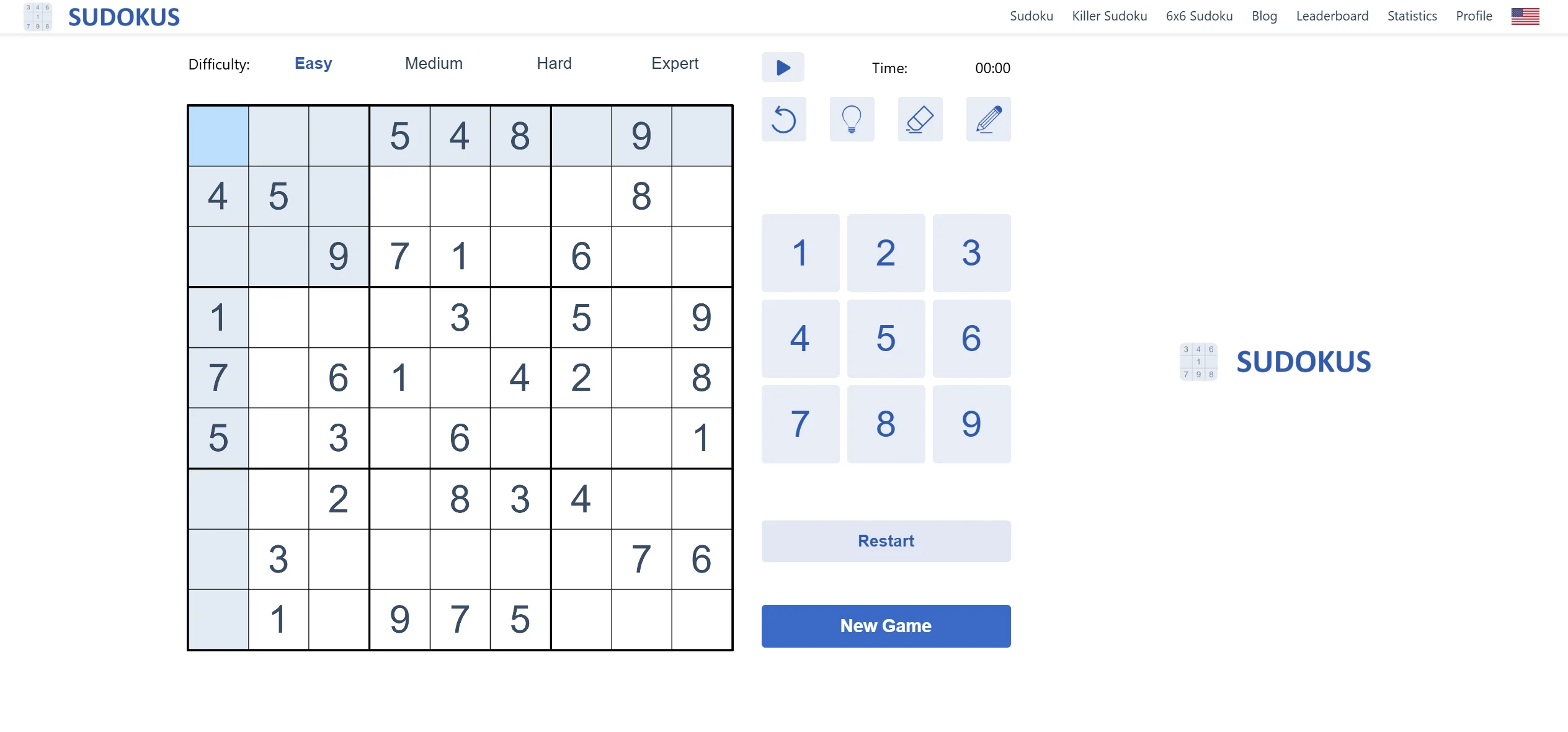
Sudoku is a logic-based combinatorial number-placement puzzle. It’s a fun and challenging game that has gained popularity worldwide. In this tutorial, we will explore how to implement a Sudoku solver in C. By the end, you’ll have a working program that can solve Sudoku puzzles of various sizes.
#### Installation
Before you begin, ensure you have a C compiler installed on your system. Common compilers include GCC and Clang. You can download and install them from their official websites.
#### Getting Started
1. **Setting Up the Project**: Create a new directory for your project and initialize a new C file, `sudoku.c`.
2. **Include Necessary Headers**: At the beginning of your file, include the required headers:
“`c
#include
#include
#include
“`
3. **Define Constants**: Define constants for the Sudoku board size and other configurations:
“`c
#define BOARD_SIZE 9
“`
4. **Create the Board**: Initialize a 2D array to represent the Sudoku board:
“`c
int board[BOARD_SIZE][BOARD_SIZE] = {0};
“`
5. **Implement the Solver**: Write a function to solve the Sudoku puzzle:
“`c
bool solveSudoku(int board[BOARD_SIZE][BOARD_SIZE]) {
int row, col = 0;
for (row = 0; row < BOARD_SIZE; row++) {
for (col = 0; col < BOARD_SIZE; col++) {
if (board[row][col] == 0) {
for (int num = 1; num <= BOARD_SIZE; num++) {
if (isValid(board, row, col, num)) {
board[row][col] = num;
if (solveSudoku(board))
return true;
board[row][col] = 0;
}
}
return false;
}
}
}
return true;
}
```
6. **Check Validity**: Implement a function to check if a number can be placed in a specific position:
```c
bool isValid(int board[BOARD_SIZE][BOARD_SIZE], int row, int col, int num) {
// Check row
for (int x = 0; x < BOARD_SIZE; x++)
if (board[row][x] == num)
return false;
// Check column
for (int x = 0; x < BOARD_SIZE; x++)
if (board[x][col] == num)
return false;
// Check 3x3 subgrid
for (int i = row - row % 3; i < row - row % 3 + 3; i++)
for (int j = col - col % 3; j < col - col % 3 + 3; j++)
if (board[i][j] == num)
return false;
return true;
}
```
7. **Print the Board**: Implement a function to print the Sudoku board:
```c
void printBoard(int board[BOARD_SIZE][BOARD_SIZE]) {
for (int i = 0; i < BOARD_SIZE; i++) {
for (int j = 0; j < BOARD_SIZE; j++)
printf("%d ", board[i][j]);
printf("\n");
}
}
```
8. **Main Function**: In the `main` function, initialize the board with the given puzzle and call the solver:
```c
int main() {
int puzzle[BOARD_SIZE][BOARD_SIZE] = {
{5, 3, 0, 0, 7, 0, 0, 0, 0},
{6, 0, 0, 1, 9, 5, 0, 0, 0},
// ... Initialize the rest of the puzzle
};
printBoard(puzzle);
if (solveSudoku(puzzle))
printBoard(puzzle);
else
printf("No solution exists\n");
return 0;
}
```
#### Frequently Asked Questions (FAQ)
**Q: What is the difference between a Sudoku puzzle and a Sudoku solver?**
A: A Sudoku puzzle is the game itself, with a partially filled grid that requires logical deduction to complete. A Sudoku solver is a program or algorithm designed to find the solution to a given Sudoku puzzle.
**Q: How can I run the Sudoku solver?**
A: Save your code in a file named `sudoku.c`, compile it using a C compiler (e.g., `gcc sudoku.c -o sudoku`), and run the executable (`./sudoku` on Unix-like systems or `sudoku.exe` on Windows).
**Q: Can I change the size of the Sudoku board?**
A: Yes, you can change the `BOARD_SIZE` constant to define the size of your Sudoku board. Remember to update the `isValid` function to accommodate the new size.
**Q: What if the Sudoku puzzle has no solution?**
A: If the Sudoku puzzle has no solution, the `solveSudoku` function will return `false`. The program will then output "No solution exists."
**Q: Can I solve more than one puzzle at a time?**
A: The current implementation solves only one puzzle at a time. You can modify the `main` function to handle multiple puzzles if needed.
**Q: Are there any performance considerations when implementing a Sudoku solver in C?**
A: Yes, performance can be a concern, especially for larger Sudoku puzzles. You can optimize the solver by using techniques like constraint propagation, backtracking, and heuristic search algorithms.